
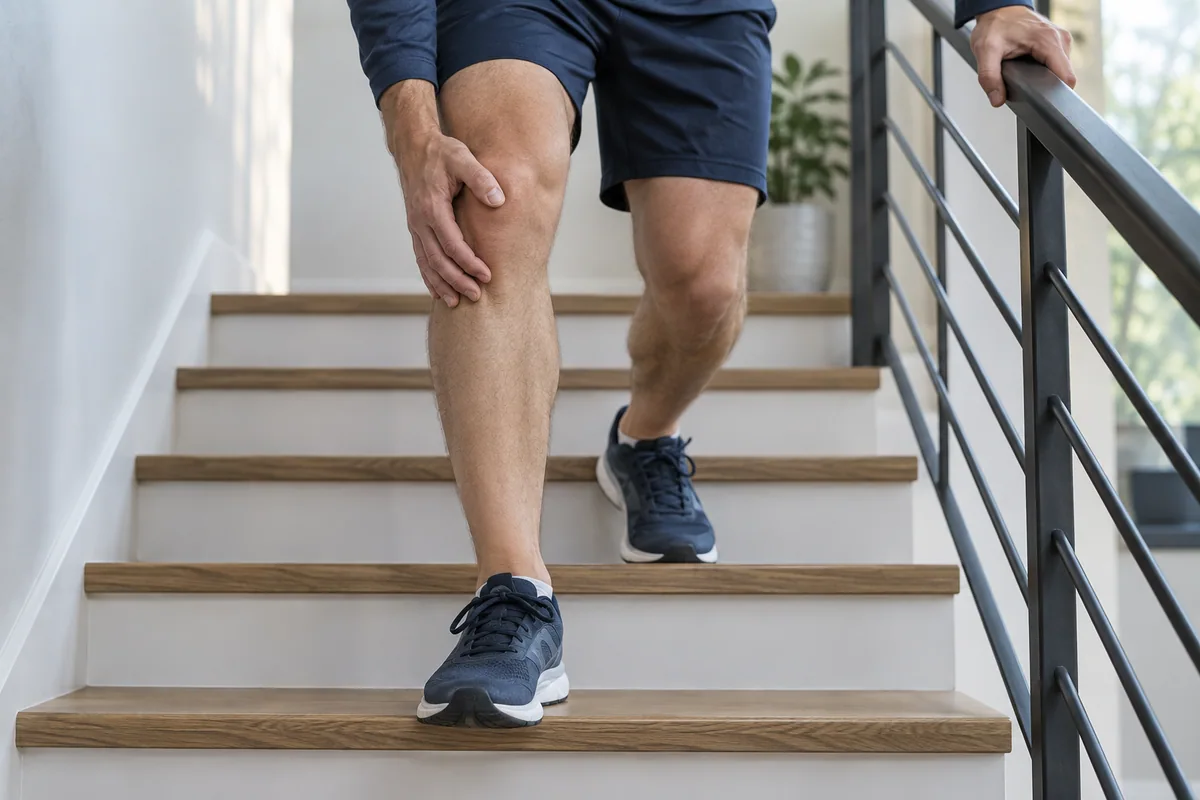
Understanding the problem
Several factors can contribute, including training load and how the leg functions during movement. A clinician assesses the knee and surrounding muscle control. Severe swelling, a traumatic injury or a locked knee may point to a different problem.
Care and next steps
A tailored exercise and load-management plan is often central to care. The aim is to improve tolerance for activities that matter to you. Treatment should be adjusted to progress rather than reduced to one exercise or a blanket ban on stairs.
Prepare for your consultation
Explain whether the pain is at the front, side or back of the knee. Note the number of stairs you face daily and how symptoms behave after activity. Ask which movements to modify temporarily and how to reintroduce them. Bring your gym routine if relevant so that exercise advice can be integrated into what you already do instead of added without considering total load.
Common questions
Is runner’s knee limited to runners?
No. Similar patellofemoral symptoms can occur in people who do not run.
Medical sources & further reading
This patient education guide was approved for publication by Dr Shahrukh Khan on 11 September 2026. It cannot diagnose your symptoms or replace a personalised clinical assessment. Editorial policy · About the doctor.