The short answer
Stop the activity after a significant injury rather than playing through worsening pain. Sports injuries can affect ligaments, muscles, tendons or bone. Severe pain, inability to bear weight or an obvious deformity needs prompt assessment.
A sudden injury and an overload problem need different questions
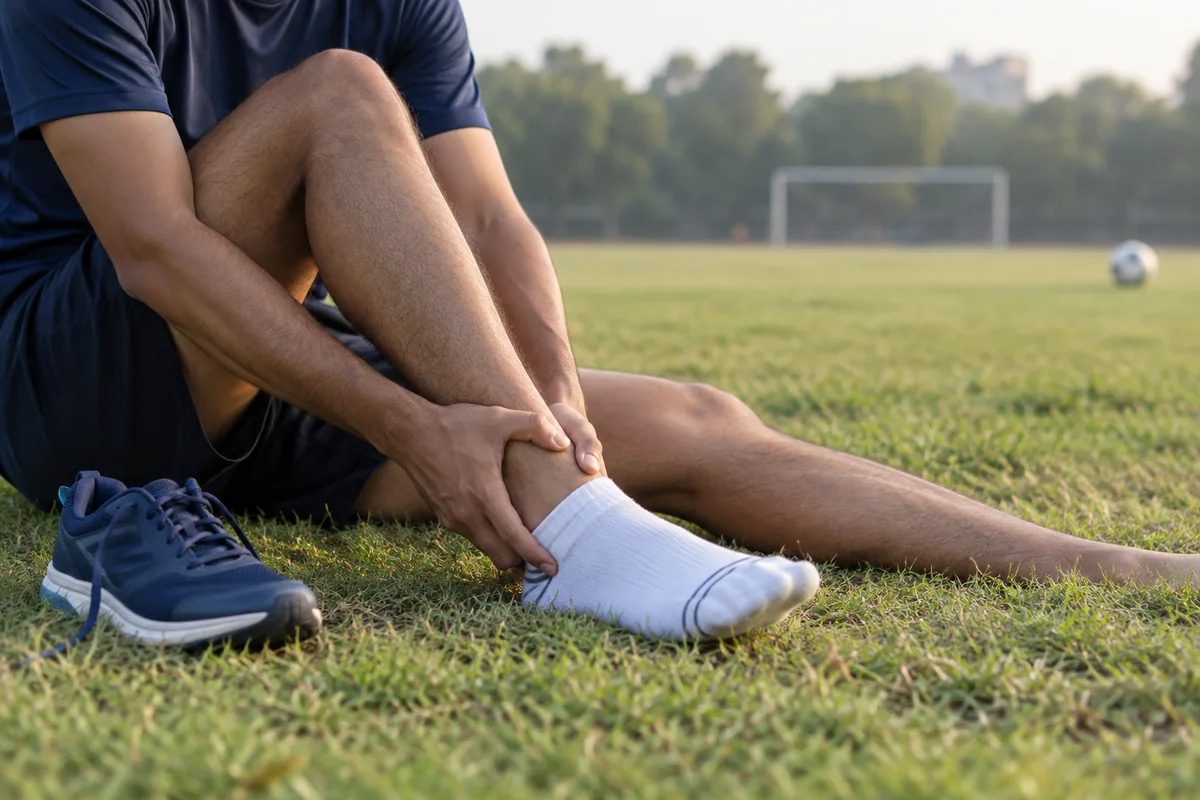
A fall, collision or awkward landing may injure bone, muscle, tendon or ligament. Overload problems develop when repeated activity outpaces the body’s recovery. A sprain affects a ligament; a strain affects muscle or tendon. These terms do not tell you how severe an injury is. Explain both the event itself and any change in training before it happened.
Medical background: [1]
Know when to stop and arrange assessment
Stop after a significant injury instead of testing it repeatedly by returning to play. Severe or increasing pain, major swelling, inability to use the limb or difficulty taking a few steps needs prompt assessment. An obvious deformity, a wound near a possible fracture, or a cold or numb limb needs emergency care. A routine appointment request should not delay treatment of a severe injury.
Medical background: [2]
Early care is protection, not a return-to-play test
Protect the injured area and pause the provoking activity. A cold pack wrapped in cloth can help symptoms; do not put ice directly on skin. Avoid forceful massage or trying to straighten an injured joint. A support should not cause numbness, colour change or increasing pain. Ask a clinician or pharmacist about suitable pain relief rather than relying on medicines to continue playing.
Medical background: [2]
Persistent running pain may involve bone
A stress injury can develop after increases in impact, distance or training frequency. Continuing through focal bone pain may allow the injury to worsen. Early X-rays do not always show a stress injury; further imaging may be considered when symptoms and examination warrant it. Persistent pain deserves assessment even if there was no single fall or collision.
Medical background: [3]
What makes a sports consultation useful?
Bring the details that a scan cannot provide: your sport, usual weekly schedule, recent changes, playing surface, footwear and competition goals. Describe swelling, giving way, locking or loss of strength. An athlete’s priorities may differ from those of someone returning to walking or gym activity, but both need a plan that fits their actual demands.
- Write down when pain begins during activity and what happens afterwards.
- Bring previous scans and the exercises already prescribed.
- Explain deadlines such as a match or physical work requirement, without treating them as a clearance date.
Rehabilitation should rebuild the abilities your activity needs
The programme depends on the injured tissue and may involve temporary protection, movement work, strengthening and a gradual increase in load. An operation is relevant for some injuries, but many are managed without surgery. Follow-up is an opportunity to review whether symptoms and function are improving and whether the working diagnosis or plan needs to change.
Medical background: [1]
Discuss return to sport as a progression
Ask what must improve before restarting training and before returning to competition. A useful conversation separates comfortable daily activity, controlled practice and full sport. Record the agreed next step, the checks to be repeated and what would trigger an earlier review. If a physiotherapist or coach is involved, ask how the advice will be shared so you receive consistent instructions.
Watch Dr Shahrukh explain
Common questions
Can I keep playing if a painkiller helps?
Pain relief does not establish that an injured tissue is ready for sport. Stop after a significant injury and seek advice appropriate to the problem.
Does every sports injury need an MRI?
No. The history and examination guide whether imaging is needed and which test answers the clinical question.
Can an overuse injury happen without a fall?
Yes. Repeated loading and changes in training can produce injuries, including bone stress injuries.
What should I ask at the end of the appointment?
Ask what activity is currently allowed, how to progress it, when to return and which symptoms should prompt earlier contact.
Medical sources & further reading
This patient education guide was approved for publication by Dr Shahrukh Khan on 11 September 2026. It cannot diagnose your symptoms or replace a personalised clinical assessment. Editorial policy · About the doctor.