
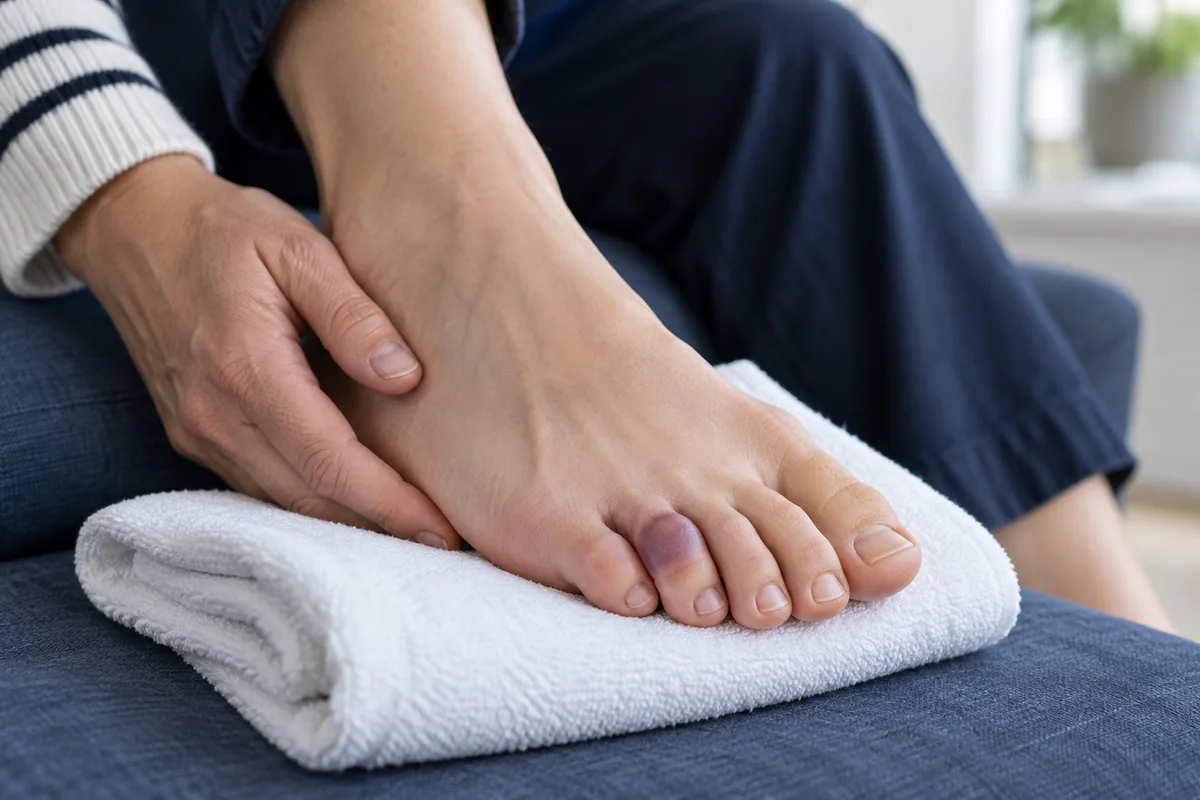
Understanding the problem
Swelling and bruising do not tell you exactly what is injured. Tell the clinician about diabetes, poor circulation or reduced sensation because these affect care. Do not assume that all toe injuries should simply be taped to the next toe.
Care and next steps
Footwear, protection and activity advice depend on the injury. Some fractures need additional treatment or follow-up. Avoid forcing a crooked toe straight or applying tight tape without knowing whether that approach is appropriate.
Prepare for your consultation
Describe whether the injury involved a crush, a stub or a twist, and bring previous treatment notes. Ask what footwear is suitable, how much walking is allowed and whether follow-up imaging is needed. If your job requires safety boots or prolonged standing, explain this before returning to work. Ask which changes in skin, pain or sensation should prompt earlier reassessment.
Common questions
Should every injured toe be taped?
No. The type and position of the injury, and your health, determine whether taping is appropriate.
Medical sources & further reading
This patient education guide was approved for publication by Dr Shahrukh Khan on 11 September 2026. It cannot diagnose your symptoms or replace a personalised clinical assessment. Editorial policy · About the doctor.