
The short answer
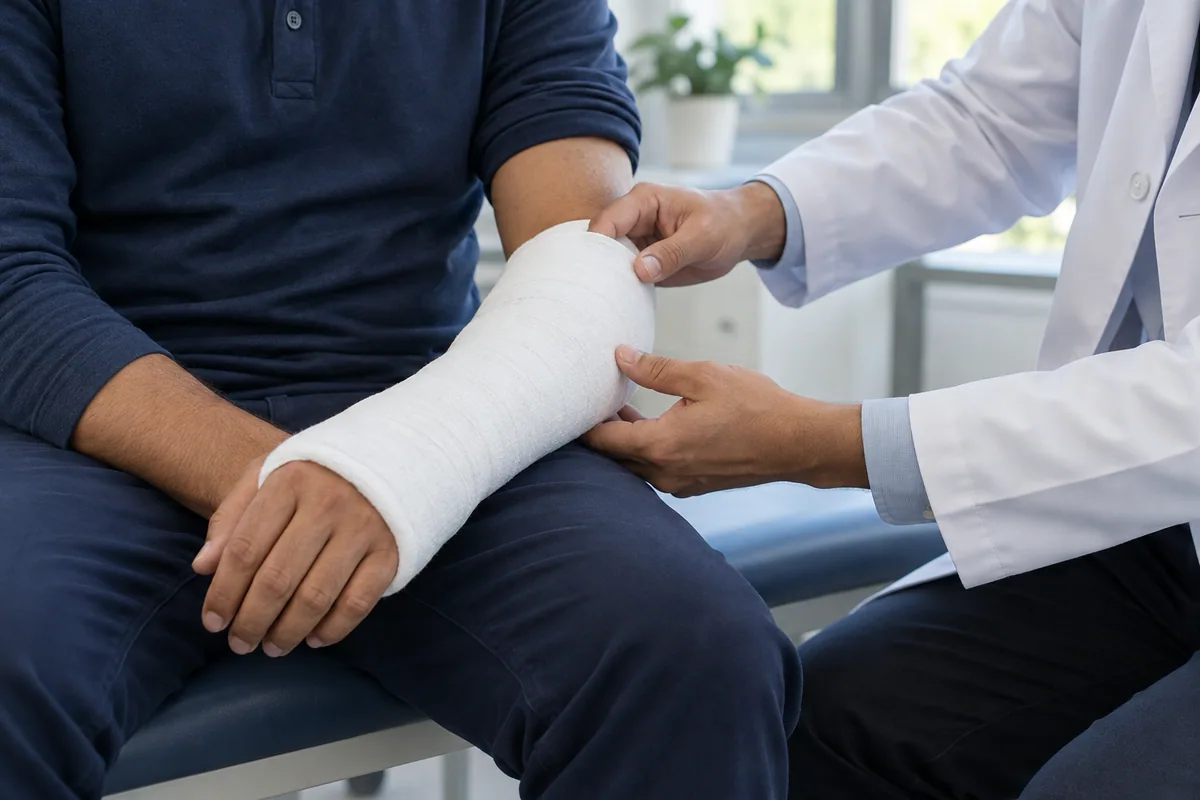
A fracture is a broken bone, including a crack. Treatment depends on the bone, alignment, stability and surrounding injuries. Some fractures need a cast or splint; others require surgery. A wound near a suspected fracture needs emergency assessment.
A crack is a fracture: the pattern matters
A fracture means a break in bone, including a crack. The bone involved, displacement, stability, joint involvement and condition of the surrounding tissues influence treatment. A small-looking injury can still need careful care. A wound close to a suspected fracture raises concern for an open fracture, which requires emergency assessment because the injury may communicate with the outside environment.
Medical background: [1]
Severe injuries should go directly to emergency care
Do not wait for an outpatient slot after a major injury, obvious deformity, a wound with a possible fracture, or loss of normal feeling or circulation. Avoid moving the limb unnecessarily and do not try to straighten it yourself. Call for emergency assistance when needed. The clinic appointment numbers are for planned consultations, not a substitute for an emergency service.
Medical background: [3]
Why some fractures need a cast and others an operation
The aim is to obtain and maintain appropriate alignment while healing occurs. A stable fracture may be managed with a splint or cast. Other fractures need realignment or fixation using implants. Surgery does not remove the need for healing time or follow-up. Ask what makes the recommended option suitable for the particular pattern, rather than assuming that all fractures should receive the same treatment.
Medical background: [1]
Ask for precise movement and weight-bearing instructions
Terms such as non-weight-bearing or protected weight-bearing need a practical explanation. Before leaving, ask the team to demonstrate how to transfer, walk with support and manage the activities you need to do at home. Clarify whether restrictions apply to a specific limb or movement and when they will be reviewed. If instructions are difficult to follow because of stairs or another health problem, say so.
- Which movements are permitted now?
- What support should I use, and who will check the fit?
- What is the next review date and what records should I bring?
Cast and splint problems need attention
Keep the support as instructed and do not insert objects to scratch underneath it. Increasing pain, tightness, numbness, burning, excessive swelling or difficulty moving fingers or toes requires prompt advice. A cold or discoloured hand or foot, or rapidly worsening severe pain, needs emergency assessment. Do not cut, adjust or remove a prescribed cast yourself.
Medical background: [2]
Healing, pain and return to activity are not identical
Pain can improve before the bone is ready for normal loads. Follow-up assesses healing and may include further X-rays. Stiffness and loss of strength can need rehabilitation after protection is reduced. Work, driving and sport should each be discussed against the injury and progress, rather than restarting because the cast has been removed or a fixed number of weeks has passed.
Medical background: [2]
Bring the full treatment record to follow-up
If initial care was elsewhere, bring original imaging, discharge notes, operation details and the current medicine list. Keep the sequence in one folder so the clinician can understand what has changed. Ask what the latest review shows, whether restrictions remain necessary and when another check is required. For a planned Delhi consultation, confirm both the location and the available time before travelling.
Common questions
Does every fracture need surgery?
No. Stability, alignment, location and associated injuries determine the options.
Can I remove support when pain settles?
No. Reduced pain does not confirm adequate healing. Follow the treating team’s instructions.
Can I get a follow-up opinion after emergency treatment elsewhere?
Yes. Bring the full records and imaging so the existing treatment and current situation can be assessed.
What if my cast feels increasingly tight?
Seek prompt advice, particularly with worsening pain, numbness or swelling. Changes in circulation or severe deterioration need emergency assessment.
Medical sources & further reading
- AAOS: Fractures — broken bones
- AAOS: Cast care and warning symptoms
- NHS: Broken leg and immediate care
This patient education guide was approved for publication by Dr Shahrukh Khan on 11 September 2026. It cannot diagnose your symptoms or replace a personalised clinical assessment. Editorial policy · About the doctor.