Understanding the problem
Assessment establishes which bone is broken and whether alignment, skin, nerves or circulation are affected. Major trauma, deformity or an open injury needs emergency care. Treatment may include immobilisation, realignment or surgery.
Care and next steps
Healing is monitored through examination and sometimes repeat imaging. Support and permitted activity can change as recovery progresses. Seek help for worsening pain, altered sensation or problems with the cast or wound rather than waiting for a scheduled review.
Prepare for your consultation
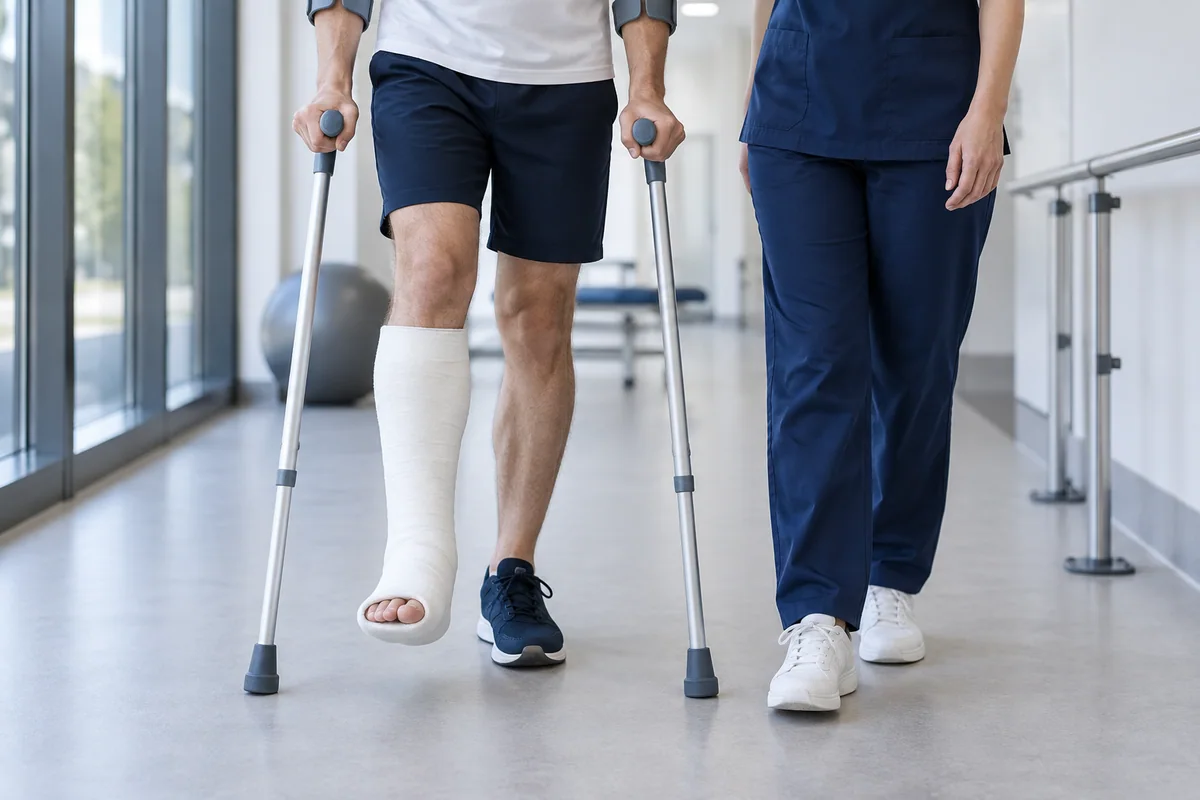
Ask for the loading instruction in writing and clarify the meaning of terms such as non-weight-bearing or partial weight-bearing. Discuss walking aids, stairs and transport with the team. Bring operation details to any second opinion so implant and fracture information are available. At follow-up, ask whether restrictions have changed and what evidence supports the next stage.
Translate the restriction into everyday tasks
Ask the team to demonstrate your permitted loading rather than relying only on a term such as partial weight bearing. Practise getting to the toilet and negotiating the actual steps at home. Request written instructions that your physiotherapist and family can use.
At each review
Use these questions to make the consultation specific to your situation.
- Has the loading instruction changed?
- Which examination or imaging findings support that change?
- What should I do if I cannot safely follow the restriction at home?
Common questions
Can pain guide all my walking decisions?
No. Pain is only one part of assessment; the fracture and fixation plan also determine safe loading.
Medical sources & further reading
These updates are awaiting medical review by Dr Shahrukh Khan. It cannot diagnose your symptoms or replace a personalised clinical assessment. Editorial policy · About the doctor.