
Understanding the problem
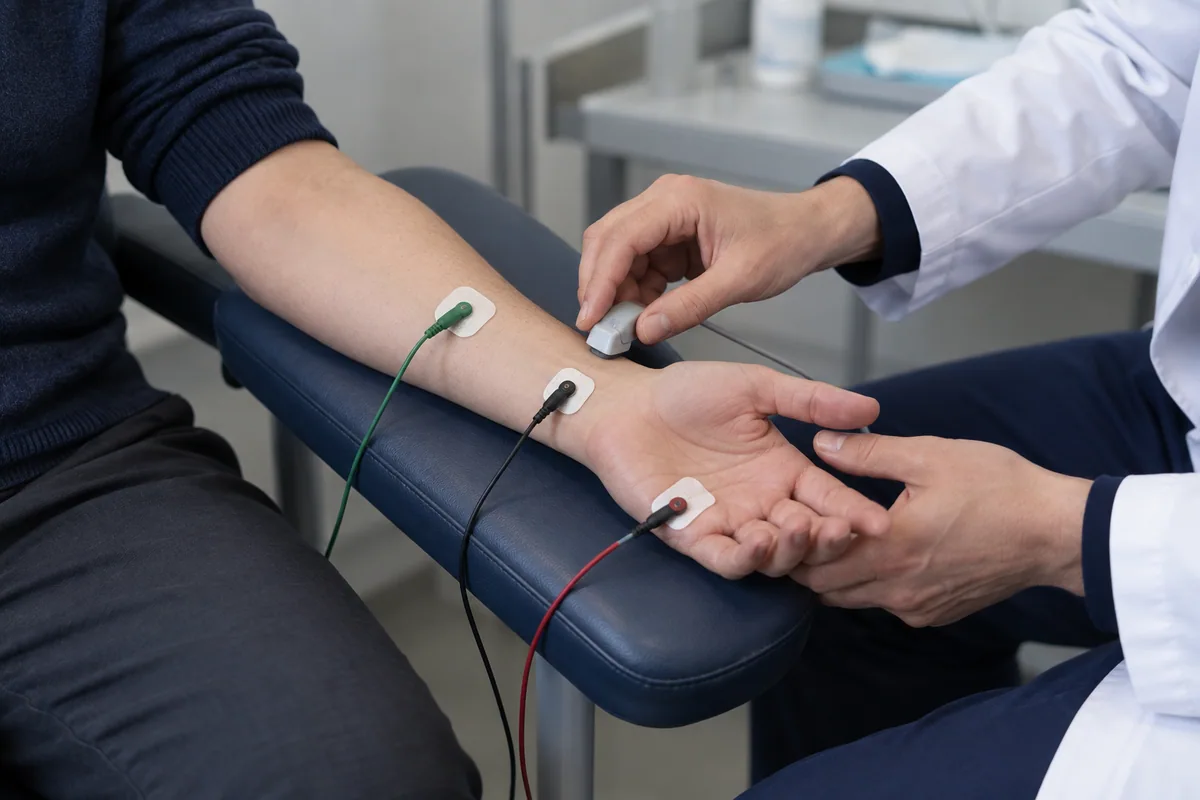
Nerve conduction testing uses small electrical stimuli and records responses. EMG may use a fine needle electrode in selected muscles. The clinician chooses the tests needed for the suspected problem and explains what sensations to expect.
Care and next steps
Tell the testing team about blood-thinning medicines, implanted devices and relevant health conditions. Follow their preparation instructions. Do not stop medicines without advice. Ask when the report will reach the referring clinician and who will explain its significance.
Prepare for your consultation
Write down the affected fingers or areas and when symptoms occur. Bring earlier nerve tests and relevant scans for comparison. At follow-up, ask whether the findings locate the problem and whether they change the treatment choices. A report can contain unfamiliar measurements, so focus on the practical conclusion and next step rather than trying to interpret each number alone.
Common questions
Is EMG the same as an MRI?
No. Electrodiagnostic tests assess function; MRI provides images of structures.
Medical sources & further reading
This patient education guide was approved for publication by Dr Shahrukh Khan on 11 September 2026. It cannot diagnose your symptoms or replace a personalised clinical assessment. Editorial policy · About the doctor.