Compare the options at your consultation
These are discussion prompts. Not every option will be suitable for your diagnosis.
| Option | What to ask |
|---|---|
| Non-surgical care | Which options remain suitable, and how will we measure whether they help? |
| Partial replacement | Is the damage confined to an area suitable for partial replacement? |
| Total replacement | Why is total replacement being considered for my knee? |
When is knee replacement worth discussing?
The useful question is how much the knee limits your life despite suitable treatment. A person who struggles with ordinary walking, sleep or getting out of a chair faces a different decision from someone whose X-ray looks arthritic but whose daily activities remain manageable. The consultation should connect the joint findings with the difficulties that matter to you.
- Describe an activity you have stopped, and what prevents it: pain, stiffness or instability.
- Explain what you have already tried and whether it helped.
- Set a practical goal, such as shopping independently or managing stairs at home.
Medical background: [2]
Watch Dr Shahrukh explain
What is replaced, and what stays?
Knee replacement resurfaces damaged areas at the ends of the thighbone and shinbone with artificial components. A plastic bearing separates them. The kneecap surface may also be treated. Total and partial replacements address different patterns of joint damage; they are not interchangeable choices based only on the size of an incision. The appropriate operation depends on the affected compartments, ligament function and overall assessment.
Medical background: [1]
What can be tried before surgery?
An individual programme may include strengthening, activity adjustments, walking support, weight management where relevant, and suitable pain treatment. Injections may be discussed for selected circumstances. Each option has limitations and possible harms; a treatment that helped a friend may not fit your medical history. Bring a record of previous physiotherapy, medicines and injections so the discussion can move beyond repeating unsuccessful measures.
Medical background: [2]
What happens at the assessment?
The surgeon reviews symptoms, movement, stability, alignment and X-rays, alongside your general health. The aim is to establish whether replacement is likely to address the main problem and whether preparation is needed first. Tell the team about diabetes, previous infections, blood-thinning medicines, allergies and earlier operations. Do not stop regular medicines yourself: ask for a written plan from the treating team.
Medical background: [1]
Think about recovery in stages
Walking with support and prescribed exercises commonly start during the hospital stay. At home, the early priorities are moving safely, caring for the wound and following the rehabilitation plan. Strength, endurance and confidence improve over time; complete recovery can take several months. Returning to a desk, climbing multiple flights of stairs and resuming a physically demanding job are different milestones.
- Ask which walking aid to use and when the team will reassess it.
- Arrange help with transport, shopping and household tasks before admission.
- Discuss driving, work and exercise separately rather than asking for one universal recovery date.
Medical background: [3]
Risks and symptoms that need attention
Potential problems include infection, blood clots, stiffness and continuing pain. After surgery, worsening redness, wound leakage, fever or new calf pain and swelling need urgent advice from the treating team. Sudden breathlessness or chest pain needs emergency assessment. Before discharge, save a reliable contact route and understand where to go if the surgical team cannot be reached.
Medical background: [4]
Prepare for a knee consultation in Delhi
Bring your actual X-rays as well as reports, previous operation records and a current medicine list. Note whether you use stairs, a floor-level toilet or low seating at home; these details help the team discuss practical preparation. You can request a consultation at Daryaganj, Karol Bagh or Geeta Colony. Confirm the clinic and time before travelling.
- Ask why the proposed operation suits your knee and what alternatives remain.
- Request an itemised estimate covering the implant, admission, rehabilitation and follow-up.
- Ask how improvement will be judged against your own goals.
Bring your priorities into the treatment decision
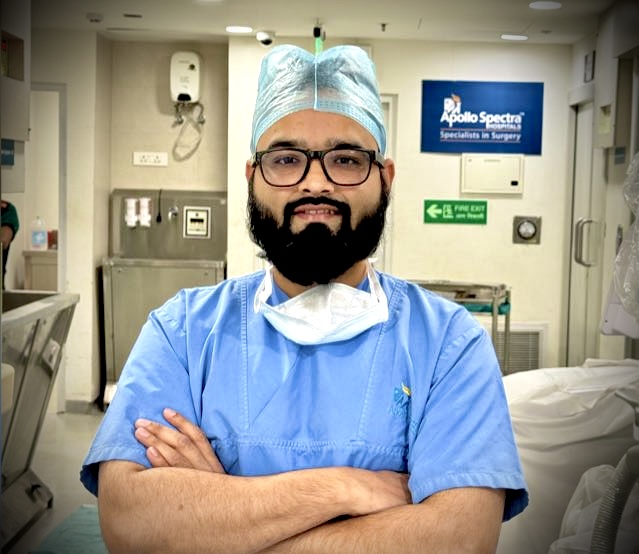
A useful treatment plan connects the diagnosis with your daily requirements. Bring these points to your discussion with Dr Shahrukh Khan.
- Ask how partial and total replacement differ for your particular knee.
- Discuss stairs, floor sitting and toilet arrangements before committing to a recovery plan.
- Request an itemised estimate covering the implant, hospital stay, rehabilitation and follow-up.
X-rays from Dr Shahrukh’s practice
Joint replacement & fracture fixation
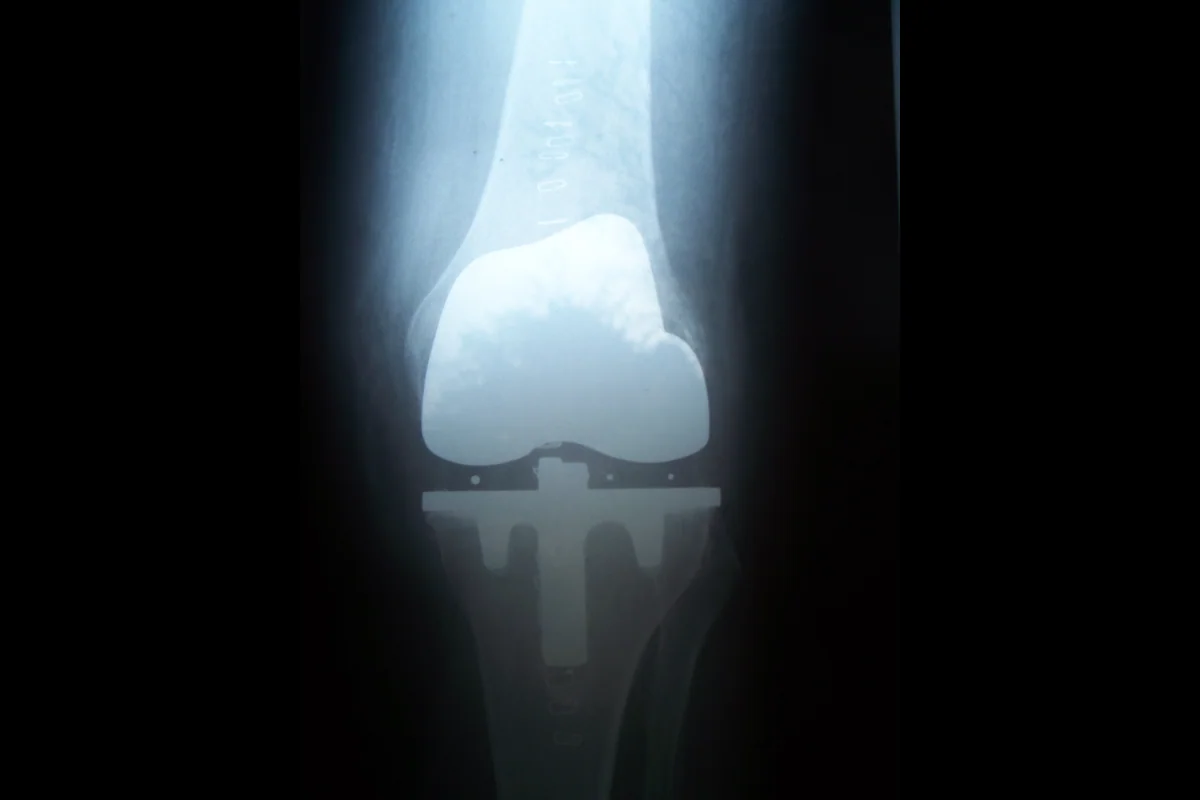
Images supplied by Dr Shahrukh Khan, with short explanations of the bones and implants shown. Tap an image to enlarge it.
Knee X-ray showing replacement components at the ends of the thigh and shin bones.
Knee X-ray showing replacement components at the ends of the thigh and shin bones.
Patient-information areas have been cropped out where present. These images illustrate treatment methods; they do not establish recovery or a matched before-and-after result.
From Dr Shahrukh’s practice
Procedure photographs
Photographs supplied by Dr Shahrukh Khan. Open a photo to see the full image and caption. Procedure images do not predict an individual patient’s outcome.
Dr Shahrukh Khan performing knee replacement surgery.
Supplied video still. The play symbol is part of the screenshot; this is not a playable video.Common questions
Does an arthritic X-ray automatically mean surgery?
No. Symptoms, everyday limitations, examination and response to suitable treatment are considered together.
Is partial replacement always better than total replacement?
No. The options suit different patterns of damage. Ask which parts of your knee are affected and why a particular procedure is being recommended.
How long will recovery take?
Recovery progresses over months and varies between people. Ask for separate expectations for walking, work, stairs and driving.
Will the knee feel completely natural?
Pain and function may improve, but an artificial joint is not identical to a healthy natural knee. Discuss limitations as well as potential benefits.
Medical sources & further reading
- AAOS: Total knee replacement
- AAOS: Knee osteoarthritis treatment choices
- NHS: Recovering from knee replacement
- NHS: Knee replacement complications
These updates are awaiting medical review by Dr Shahrukh Khan. It cannot diagnose your symptoms or replace a personalised clinical assessment. Editorial policy · About the doctor.