Understanding the problem
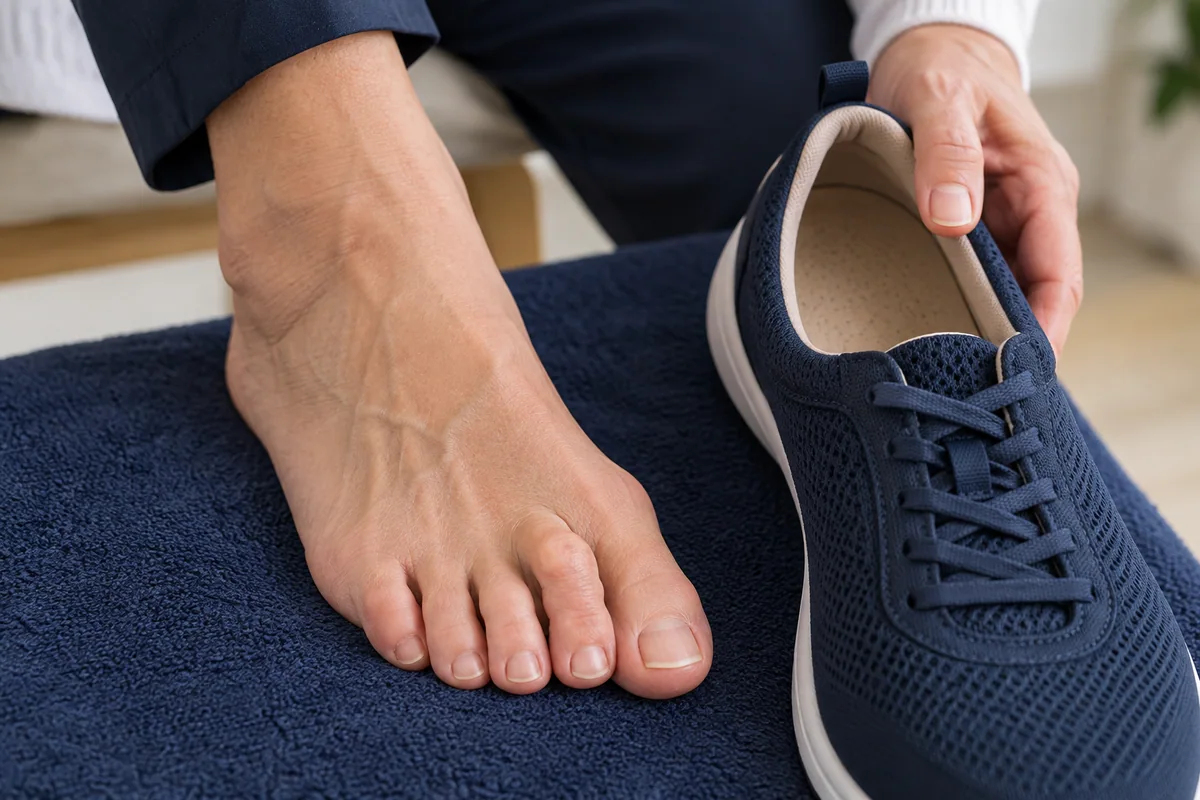
Shoe friction can cause uncomfortable skin changes over the bent area. Toe position may become more fixed over time. Examination considers circulation, sensation and other foot problems rather than focusing only on the visible bend.
Care and next steps
Roomier footwear, suitable padding or exercises may help selected flexible problems. Surgery can be considered for persistent symptoms or a fixed deformity after assessment. People with diabetes or poor sensation should seek professional advice about skin lesions instead of treating them aggressively at home.
Prepare for your consultation
Bring the shoes used for work and everyday walking. Explain any numbness, wounds or difficulty finding footwear. Ask whether the toe is flexible and what each option can realistically change. If surgery is discussed, clarify postoperative footwear, walking limits and how other toe problems affect the plan. Cosmetic appearance alone should not replace a discussion of comfort and function.
Common questions
Can shoes alone straighten every hammer toe?
No. They may improve comfort, but a fixed deformity can need a different approach.
Medical sources & further reading
This patient education guide was approved for publication by Dr Shahrukh Khan on 11 September 2026. It cannot diagnose your symptoms or replace a personalised clinical assessment. Editorial policy · About the doctor.