Understanding the problem
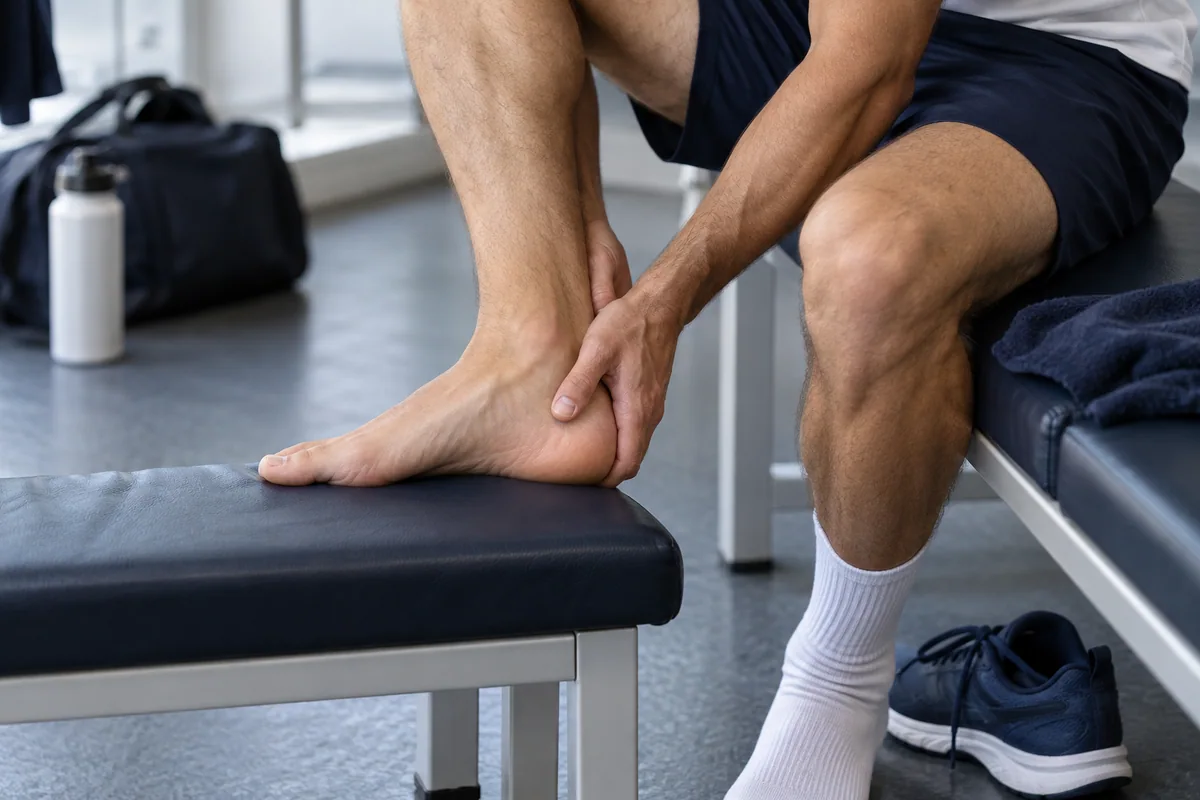
The Achilles tendon connects the calf muscles to the heel. A rupture affects how force is transmitted during walking. The clinician uses the history and examination, with imaging when needed, to confirm the injury and discuss treatment.
Care and next steps
Both non-surgical functional treatment and surgery may be considered. Each requires a structured protection and rehabilitation plan. The choice depends on the patient, injury and available follow-up, including discussion of wound, re-rupture and other risks.
Prepare for your consultation
Record the time and mechanism of injury and bring information about initial splinting or treatment. Explain your work, sporting goals and ability to attend rehabilitation. Ask for exact instructions about support, ankle position and weight-bearing while decisions are made. Make sure you know whom to contact if the support becomes uncomfortable or symptoms change rather than adjusting the treatment yourself.
Common questions
Can I rule out rupture because I can move my ankle?
No. Preserved movement does not reliably exclude an Achilles rupture; assessment is needed.
Medical sources & further reading
This patient education guide was approved for publication by Dr Shahrukh Khan on 11 September 2026. It cannot diagnose your symptoms or replace a personalised clinical assessment. Editorial policy · About the doctor.