
Understanding the problem
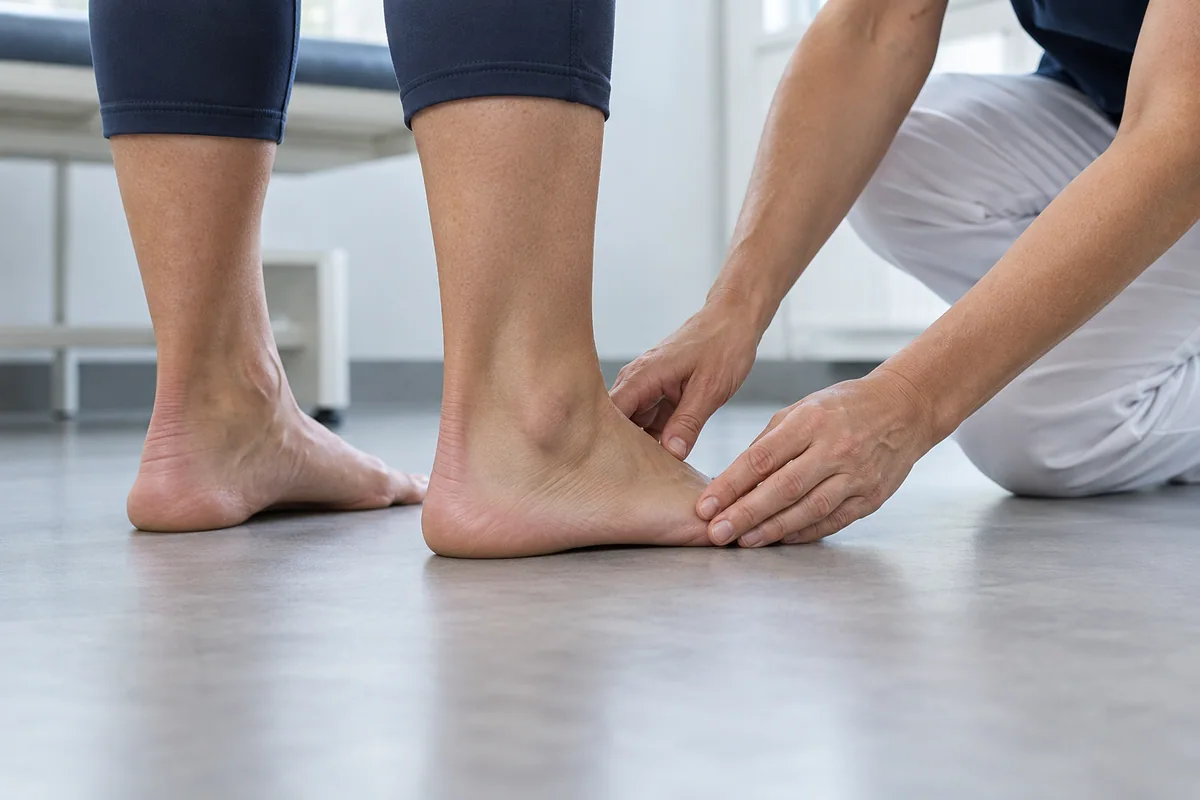
Low arches in a child do not automatically mean a disorder. A clinician checks flexibility, movement and symptoms. A painful or newly changed foot deserves a different conversation from a lifelong comfortable low arch.
Care and next steps
Supportive footwear, exercises or insoles may help selected symptoms after assessment. They are not a guaranteed way to permanently reshape the foot. Further investigation or specialist care depends on the examination and the suspected cause.
Prepare for your consultation
Describe when the change was first noticed and whether one foot differs from the other. Bring commonly worn shoes and any insoles you have tried. For a child, explain participation in play and sport rather than focusing only on appearance. Ask what improvement to look for and when to return if the suggested measures do not help.
Common questions
Does every child with flat feet need treatment?
No. Comfortable flat feet without functional problems often do not need treatment.
Medical sources & further reading
This patient education guide was approved for publication by Dr Shahrukh Khan on 11 September 2026. It cannot diagnose your symptoms or replace a personalised clinical assessment. Editorial policy · About the doctor.