
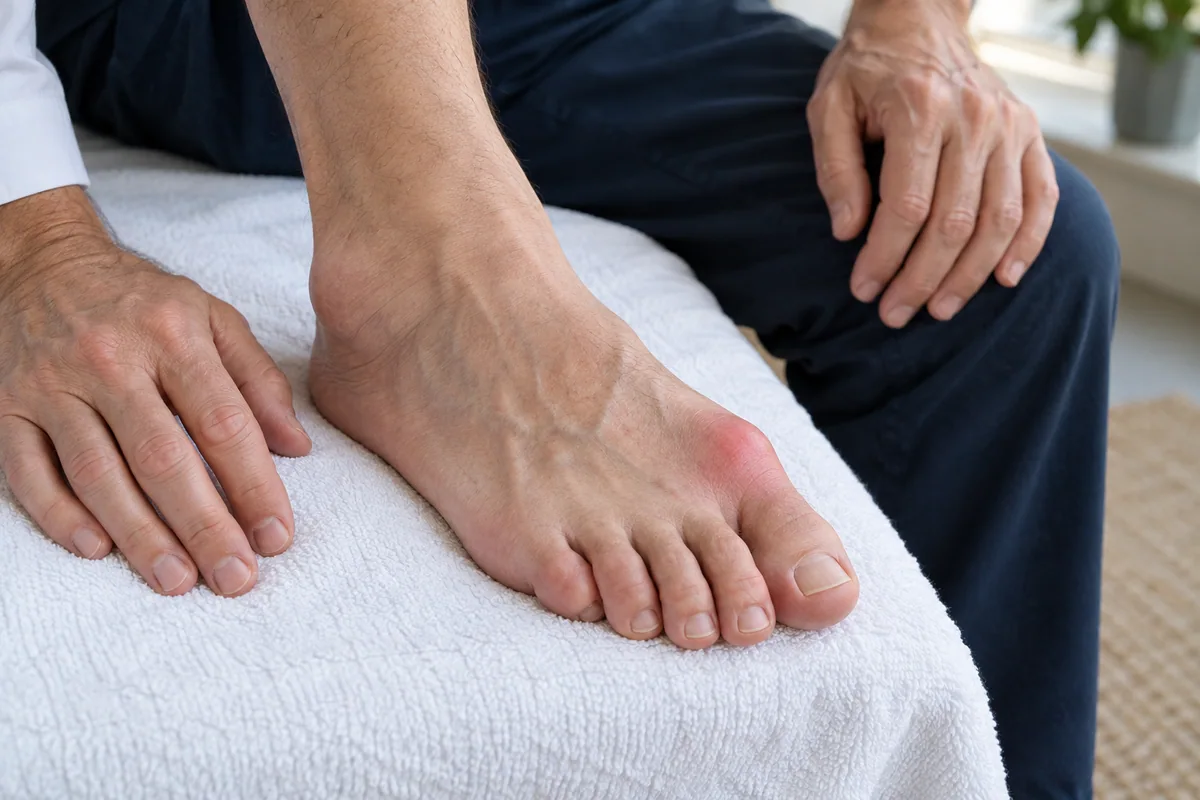
Understanding the problem
Gout involves urate crystals in joints and can affect more than the big toe. A first episode needs medical assessment. Blood tests and, in some cases, joint-fluid testing help clarify the diagnosis. A remembered high uric-acid result does not safely explain every later episode of joint swelling.
Care and next steps
Treatment for an acute attack differs from long-term prevention. If urate-lowering medicine has been prescribed, take it as directed and discuss changes with the treating clinician. Do not borrow another person’s tablets or assume that dietary changes alone are enough for recurrent symptoms.
Prepare for your consultation
Record when the attack began, which joint is affected and whether you feel feverish. Bring previous test results and the names of medicines taken during earlier attacks. Ask what diagnosis is established, what remains uncertain and when review is needed. If symptoms are severe or you feel unwell, seek urgent care rather than waiting for the next routine Delhi clinic session.
Common questions
Does a high uric-acid result prove that swelling is gout?
No. The result must be interpreted with the clinical picture, and other causes such as infection may need to be excluded.
Medical sources & further reading
This patient education guide was approved for publication by Dr Shahrukh Khan on 11 September 2026. It cannot diagnose your symptoms or replace a personalised clinical assessment. Editorial policy · About the doctor.