
Understanding the problem
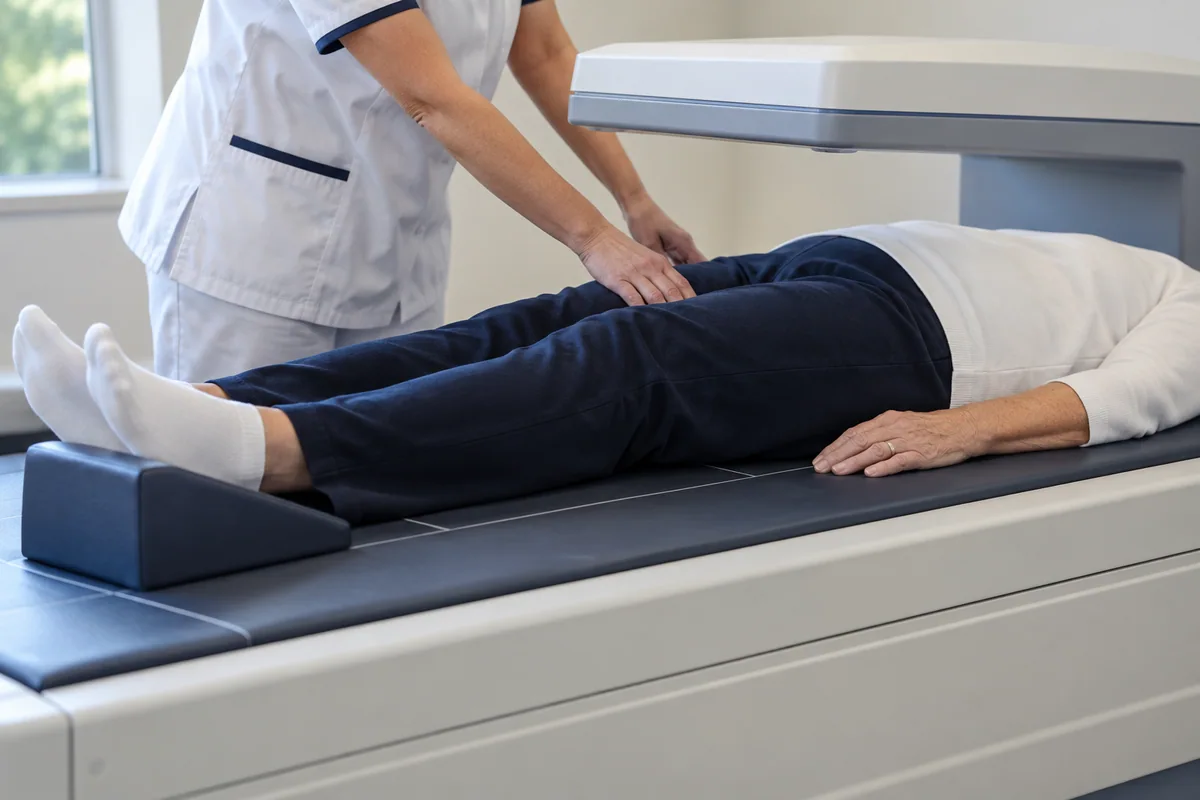
The scan commonly measures the hip and lower spine. It is different from an ordinary fracture X-ray and does not explain every source of bone or joint pain. Your clinician decides whether the test would change your care.
Care and next steps
A report may compare your bone density with a reference population. Ask the clinician to explain the relevant score and your overall fracture risk. Treatment decisions should include the history and clinical assessment, not a single number read in isolation.
Prepare for your consultation
Bring any previous DEXA reports so the dates and results can be compared. List fractures after minor falls, relevant family history and long-term medicines. Ask the imaging centre about preparation and tell them if pregnancy is possible. At the follow-up, write down whether treatment is recommended and when reassessment would be useful rather than arranging repeated scans on your own.
Common questions
Is DEXA the same as a vitamin D test?
No. DEXA measures bone density; a blood test measures vitamin D when indicated.
Medical sources & further reading
This patient education guide was approved for publication by Dr Shahrukh Khan on 11 September 2026. It cannot diagnose your symptoms or replace a personalised clinical assessment. Editorial policy · About the doctor.