
Understanding the problem
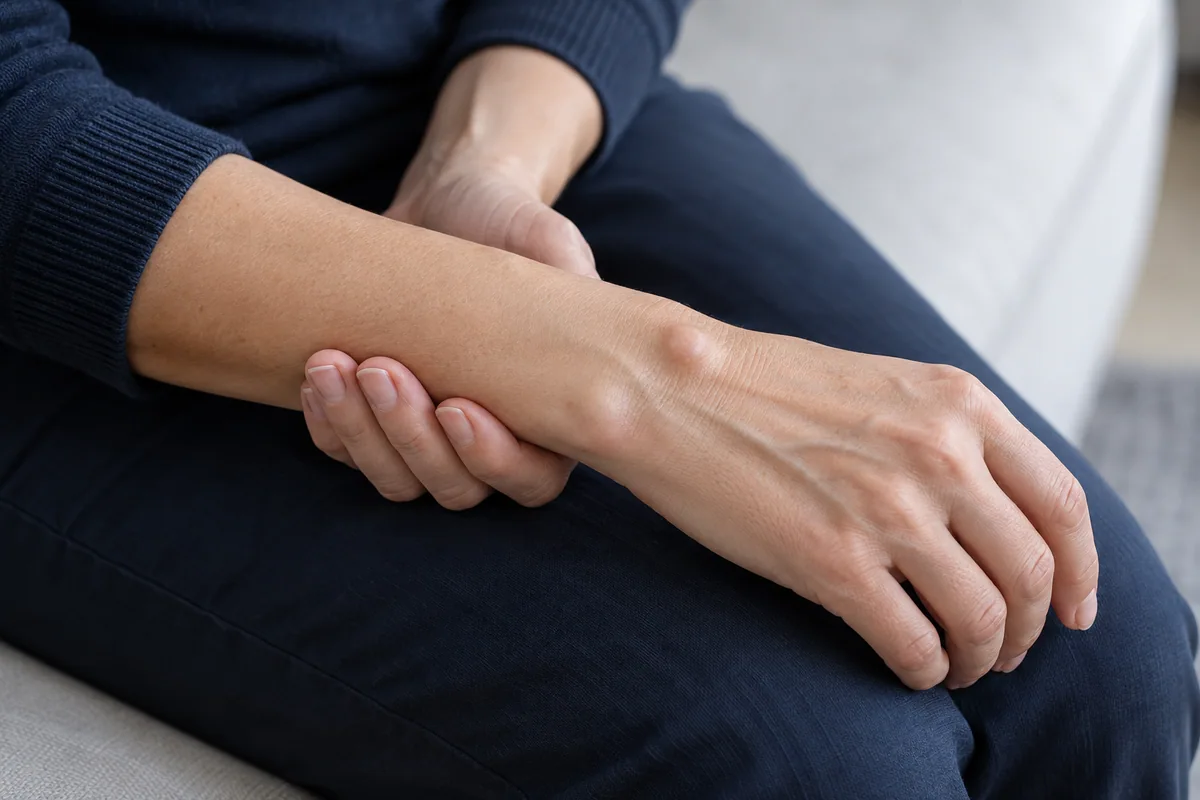
The lump may vary in size and can cause discomfort with movement. Some disappear without treatment. A clinician considers its position, feel and symptoms, and whether another explanation needs investigation.
Care and next steps
Observation may be appropriate if the diagnosis is clear and symptoms are limited. Aspiration or surgery may be discussed for selected troublesome cysts, with the possibility of recurrence. Do not hit, puncture or attempt to burst a lump yourself.
Prepare for your consultation
Note when the lump appeared and whether its size changes with activity. Explain pain, numbness or difficulty with work tasks. If you have photographs showing a change over time, bring them for context. Ask what findings support the diagnosis and what would prompt reassessment. A treatment decision should include how much the lump actually affects your hand use.
Common questions
Should I try to pop a wrist ganglion?
No. Attempting to burst it can cause injury or infection.
Medical sources & further reading
This patient education guide was approved for publication by Dr Shahrukh Khan on 11 September 2026. It cannot diagnose your symptoms or replace a personalised clinical assessment. Editorial policy · About the doctor.