
Understanding the problem
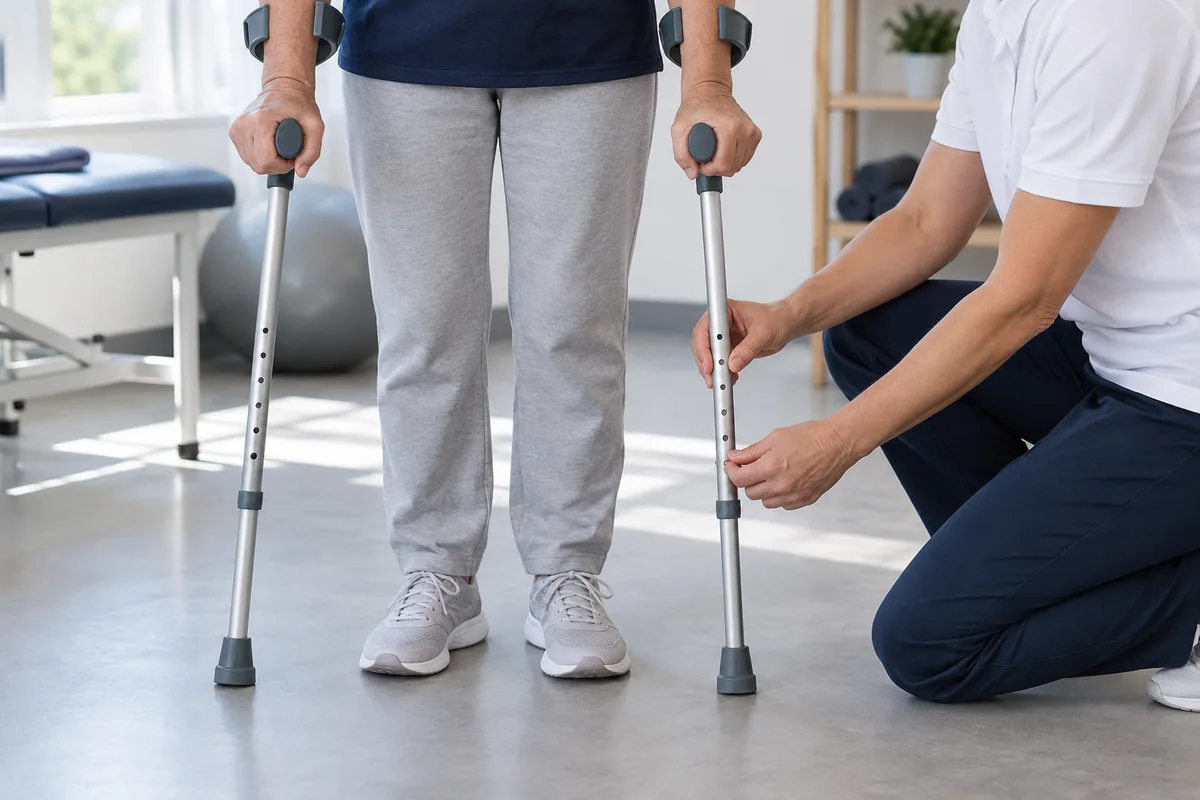
Crutches, sticks and walkers provide different levels of support. With underarm crutches, weight should pass through the hands rather than pressing into the armpits. A device borrowed from a relative may not be the correct height or type.
Care and next steps
Practise turning, getting up from a chair and negotiating any steps with supervision. Clear floor clutter and allow enough space for the device. Do not replace your prescribed aid with a stick simply because walking has become less painful.
Prepare for your consultation
Describe your home entrance, lift access and bathroom layout at the fitting appointment. Bring the shoes you usually wear. Ask the therapist to demonstrate how to carry essential items while keeping your hands available. If you feel unsteady during the demonstration, say so immediately; it is more useful to adjust the plan there than discover the problem alone on stairs later.
Common questions
Does a walking aid mean I can fully load the injured leg?
No. Follow the separate weight-bearing instructions for your injury or operation.
Medical sources & further reading
This patient education guide was approved for publication by Dr Shahrukh Khan on 11 September 2026. It cannot diagnose your symptoms or replace a personalised clinical assessment. Editorial policy · About the doctor.