
Understanding the problem
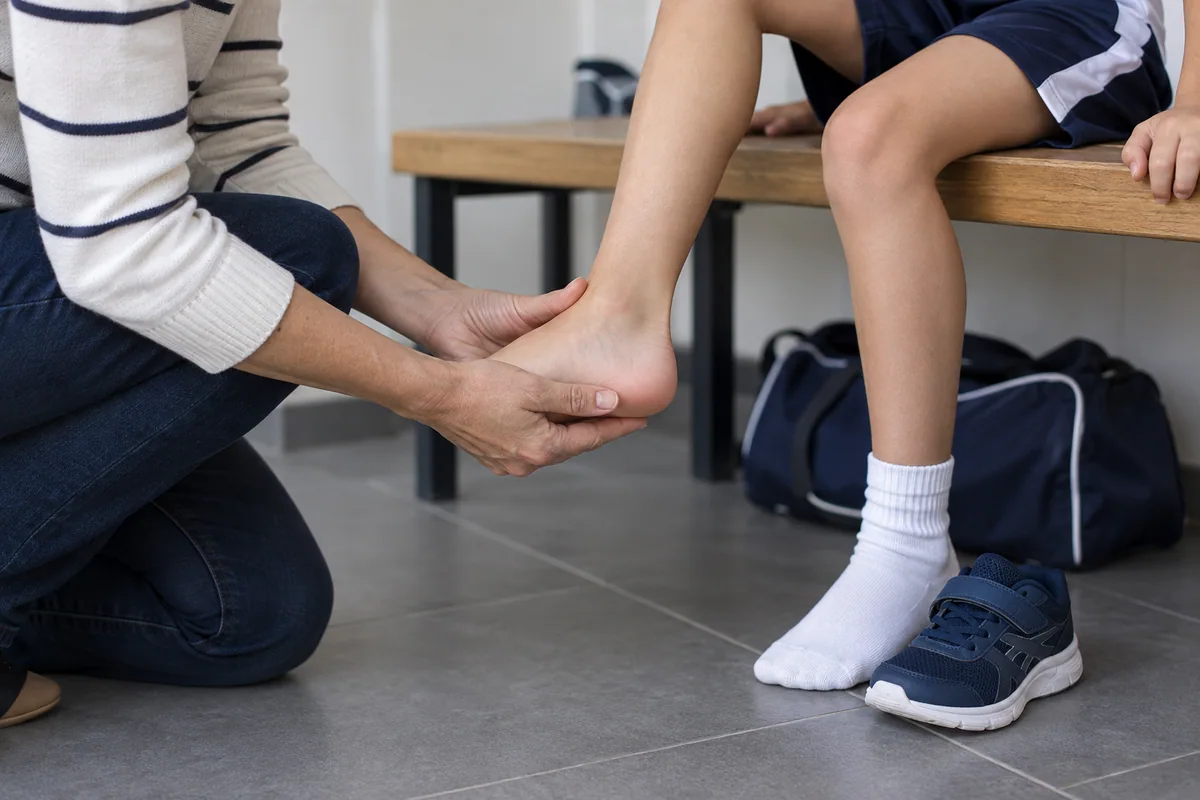
Running and jumping can put stress on the heel's growth area. Symptoms may affect one or both feet. Heel pain is not automatically Sever's disease, particularly if there is an injury, fever or difficulty bearing weight.
Care and next steps
The clinician may recommend activity modification, appropriate footwear, heel support or stretching suited to the child. Return to activity should follow symptom improvement and advice. Pushing through a painful limp is not a useful way to maintain fitness.
Prepare for your consultation
Note the sport surface, footwear and any recent increase in training. Ask the child where the pain is rather than deciding from the way they walk. At review, discuss alternatives to painful drills and what the coach should know. Clarify which changes would need reassessment so persistent heel pain is not dismissed as an inevitable part of growing.
Common questions
Should every child with heel pain receive the same exercises?
No. The diagnosis and the child's symptoms should guide the plan.
Medical sources & further reading
This patient education guide was approved for publication by Dr Shahrukh Khan on 11 September 2026. It cannot diagnose your symptoms or replace a personalised clinical assessment. Editorial policy · About the doctor.