
Understanding the problem
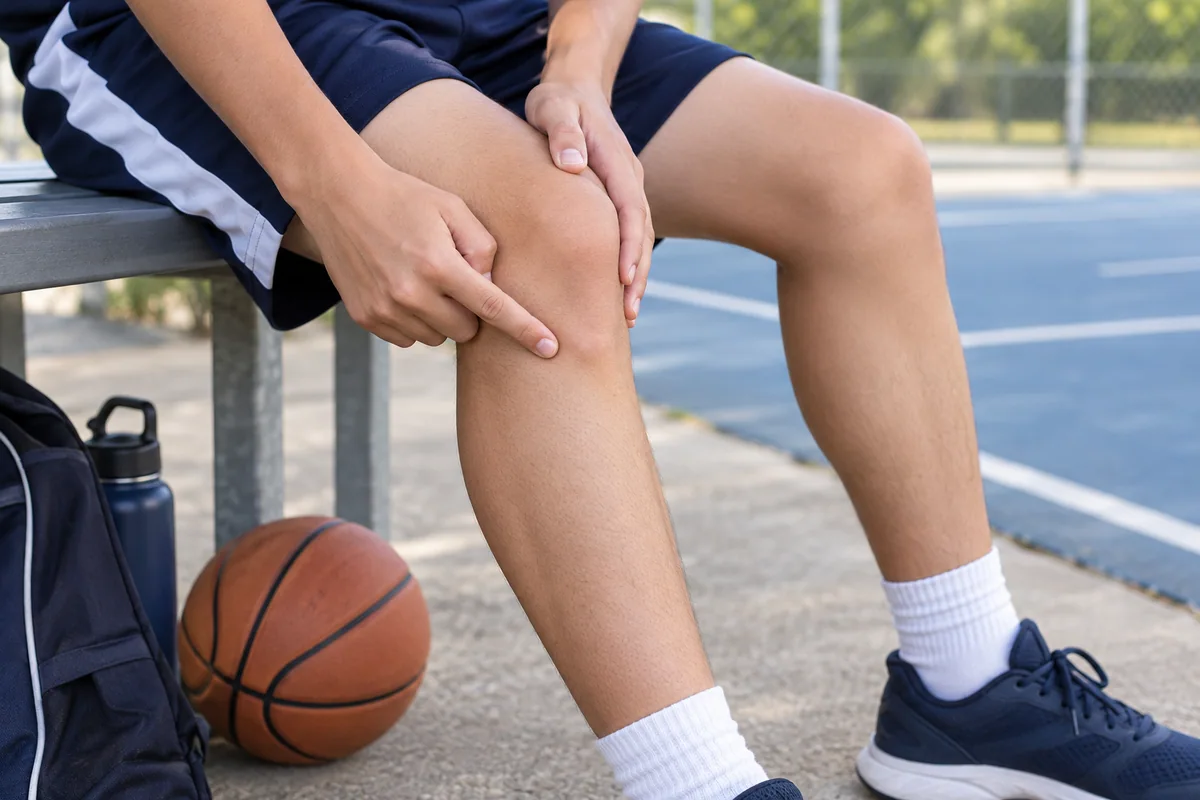
The attachment area of the patellar tendon is stressed during growth and activity. Running and jumping may provoke symptoms. A visible bump can remain even after symptoms settle, and appearance alone does not measure the severity of pain.
Care and next steps
Management commonly involves adapting painful activity and a clinician-guided flexibility and strengthening plan. The amount of sport allowed depends on symptoms and assessment. Persistent or unusual symptoms should prompt review rather than repeatedly training through pain.
Prepare for your consultation
Bring the child's weekly sport schedule, including school sessions and additional coaching. Explain whether pain limits walking, sleep or only intense exercise. Ask for practical guidance on which activities can continue and how to increase them again. Make sure the child understands the plan and can tell the coach when symptoms change, instead of relying only on adults to notice a limp.
Common questions
Does the bump below the knee necessarily disappear?
Not always. Symptoms and function are more useful guides than the bump's appearance alone.
Medical sources & further reading
This patient education guide was approved for publication by Dr Shahrukh Khan on 11 September 2026. It cannot diagnose your symptoms or replace a personalised clinical assessment. Editorial policy · About the doctor.