Understanding the problem
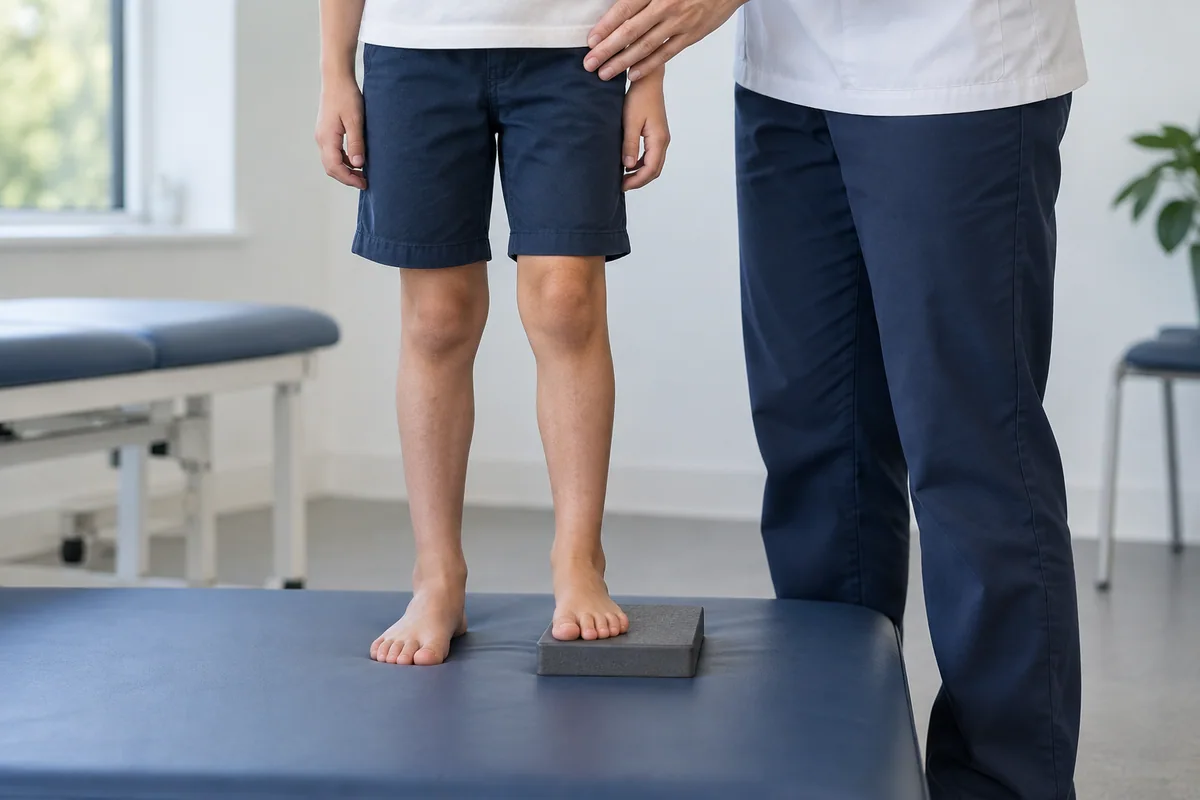
Differences may relate to development, previous injury or other conditions. Clinical measurement and sometimes imaging help distinguish true length differences from posture or joint position. A growing child's measurements may need to be followed over time.
Care and next steps
Observation or a suitable shoe lift may be considered for smaller differences. Larger or progressive differences can need specialist planning, including selected surgical options. Growth makes the timing of decisions important, so follow-up is part of the treatment plan.
Prepare for your consultation
Bring previous measurements and records of fractures or infections affecting the legs. Describe changes in walking, shoe wear or activity. Ask how the difference was measured and what is expected by the end of growth. Do not buy progressively larger lifts without review; confirm the recommended adjustment and whether it improves comfort and function for your child.
Common questions
Does every leg-length difference require surgery?
No. Many small differences can be observed or managed without an operation.
Medical sources & further reading
This patient education guide was approved for publication by Dr Shahrukh Khan on 11 September 2026. It cannot diagnose your symptoms or replace a personalised clinical assessment. Editorial policy · About the doctor.