
Understanding the problem
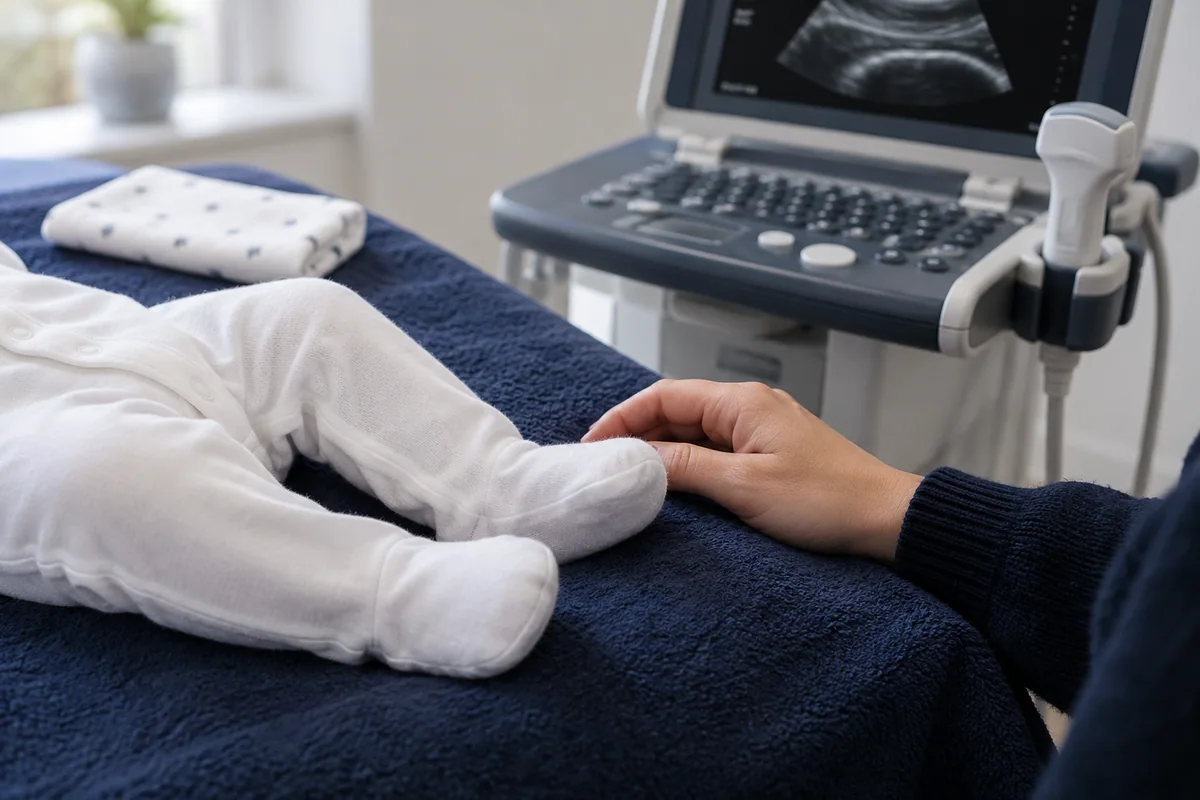
The ball and socket may not fit securely. Risk factors and examination findings help determine whether imaging is needed. Symptoms can be subtle in infancy, so normal-looking movement at home cannot replace the recommended screening process.
Care and next steps
Treatment depends on the child's age and hip findings. A specialist may use a harness in young babies, while other treatment can be needed later. Harness positioning and adjustments must be managed by the treating team.
Prepare for your consultation
Bring birth records and any hip examination or ultrasound reports. Tell the clinician about breech positioning and family history if known. Ask how the proposed device affects feeding, clothing and bathing, and who to contact if it seems uncomfortable. Keep scheduled checks even when treatment is going smoothly because the plan depends on monitoring the developing hip.
Common questions
Can I adjust a baby's hip harness myself?
Only make changes specifically demonstrated and authorised by the treating team.
Medical sources & further reading
This patient education guide was approved for publication by Dr Shahrukh Khan on 11 September 2026. It cannot diagnose your symptoms or replace a personalised clinical assessment. Editorial policy · About the doctor.