
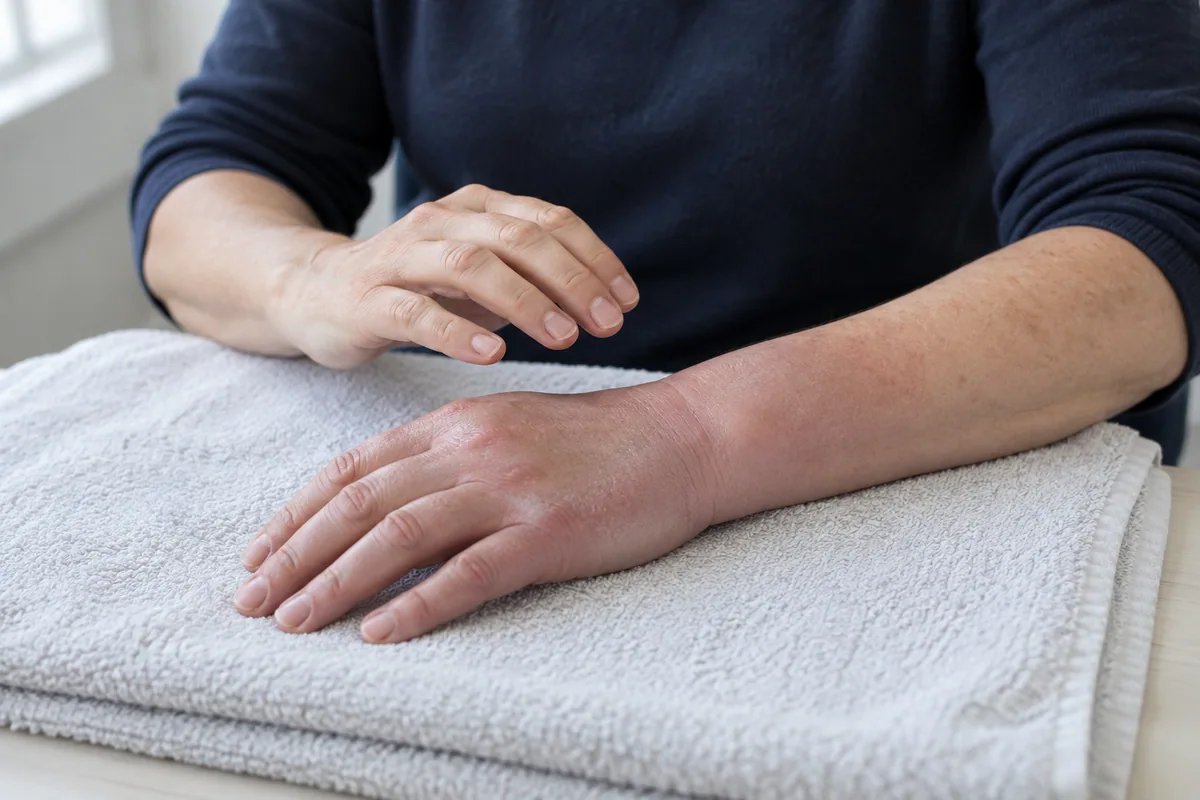
Understanding the problem
CRPS may develop after an injury, and symptoms can affect movement and everyday life. Other causes of pain need consideration. Early assessment helps establish a plan that addresses both physical function and the wider impact of persistent pain.
Care and next steps
Care can involve rehabilitation, pain treatment and psychological support as part of a combined approach. Psychological support does not mean the pain is imaginary. The programme should be tailored and reviewed rather than based on forcing the limb through uncontrolled pain.
Prepare for your consultation
Describe changes in sensitivity, colour, temperature and function, including how symptoms affect sleep and daily tasks. Bring your injury and treatment history. Ask which clinicians will coordinate care and how progress will be measured. Small functional goals can make reviews more concrete, such as tolerating clothing or using the hand for a particular task, without promising a fixed recovery date.
Common questions
Is persistent pain after injury always CRPS?
No. A clinician needs to assess the pattern and consider other explanations.
Medical sources & further reading
This patient education guide was approved for publication by Dr Shahrukh Khan on 11 September 2026. It cannot diagnose your symptoms or replace a personalised clinical assessment. Editorial policy · About the doctor.