
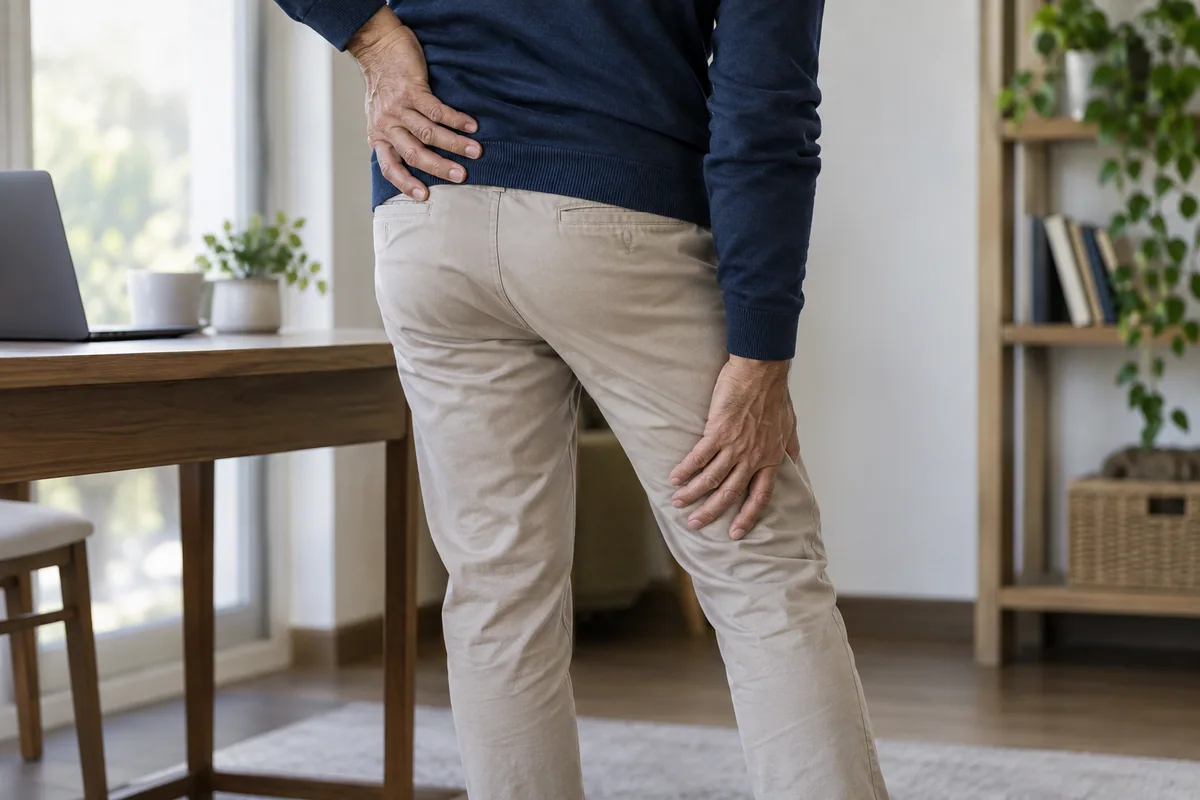
The short answer
Many episodes of back pain improve over a few weeks, but persistent or worsening symptoms deserve assessment. New bladder or bowel changes, numbness around the groin or weakness affecting both legs require emergency care rather than a routine appointment.
Recognise symptoms that need emergency assessment
New difficulty passing urine, loss of bladder or bowel control, numbness around the genitals or anus, or severe or worsening symptoms affecting both legs can signal a serious spinal problem. Seek emergency care instead of waiting for a clinic appointment. Back pain after a major accident also requires urgent assessment. Do not use the absence of one warning sign to dismiss a rapidly worsening problem.
Medical background: [2]
Back pain and sciatica describe different patterns
Back pain may stay around the lower back. Sciatica describes pain and sometimes tingling, numbness or weakness related to irritation of a nerve, often extending down one leg. Disc problems are one possible explanation, but symptoms and examination are needed to interpret the cause. The location of pain and its effect on function are more useful than a scan label on its own.
What an assessment can clarify
The clinician asks about the onset, pattern, injury history and relevant health conditions, then examines movement and nerve function as appropriate. Imaging is considered when it can answer a clinical question or change the plan. Tell the clinician about new weakness, fever, feeling unwell, or other changes. Previous imaging may help, but there is no need to arrange an MRI solely to be allowed a first consultation.
What can non-surgical care involve?
For uncomplicated back pain, staying active within tolerance is generally preferable to prolonged bed rest. The plan may include changes to provoking activities, suitable pain treatment and rehabilitation. Exercises should be matched to the problem and adjusted if symptoms worsen. Medicines also need an individual discussion, particularly if you have other illnesses or take regular treatment.
Medical background: [1]
Translate advice into work and home activities
Explain what a normal day actually involves: commuting, sitting, lifting, standing or caring for someone else. Ask which tasks you can continue, which need temporary changes and how to increase activity. A desk worker and someone doing heavy manual work may need different practical instructions. Consider writing down one or two functional goals so progress is easier to discuss at review.
- Describe whether pain travels below the knee and any numbness or weakness.
- Note how long you can sit, stand or walk before symptoms interfere.
- Bring current medicines and previous reports without assuming the report itself determines treatment.
When are specialist procedures discussed?
Persistent disabling symptoms or particular structural and neurological findings may lead to discussion of additional treatment, including surgery in selected cases. Ask what finding the proposed procedure addresses, what benefit is expected and what limitations remain. A recommendation should explain the alternatives and why they are appropriate or insufficient for your situation.
Medical background: [3]
Agree on a follow-up and escalation plan
Before the visit ends, clarify the next step and the changes that should bring you back sooner. Ask whether another test is needed, who will guide rehabilitation and how progress will be assessed. Save the emergency symptoms separately from the routine booking information. If symptoms change substantially, seek reassessment rather than continuing an old exercise or medication plan without advice.
Watch Dr Shahrukh explain
Common questions
Does sciatica always require an operation?
No. Many people are treated without surgery; the plan depends on the cause, severity and clinical findings.
Should I stay in bed until all pain disappears?
Prolonged bed rest is generally discouraged for uncomplicated back pain. Ask what activity is appropriate for your situation.
Is an MRI required before booking?
No. Bring existing imaging if you have it. The clinician can advise whether a new test is useful.
When should I bypass routine booking?
New bladder or bowel changes, numbness around the groin or severe or worsening symptoms in both legs require emergency assessment.
Medical sources & further reading
This patient education guide was approved for publication by Dr Shahrukh Khan on 11 September 2026. It cannot diagnose your symptoms or replace a personalised clinical assessment. Editorial policy · About the doctor.